
Looking Back
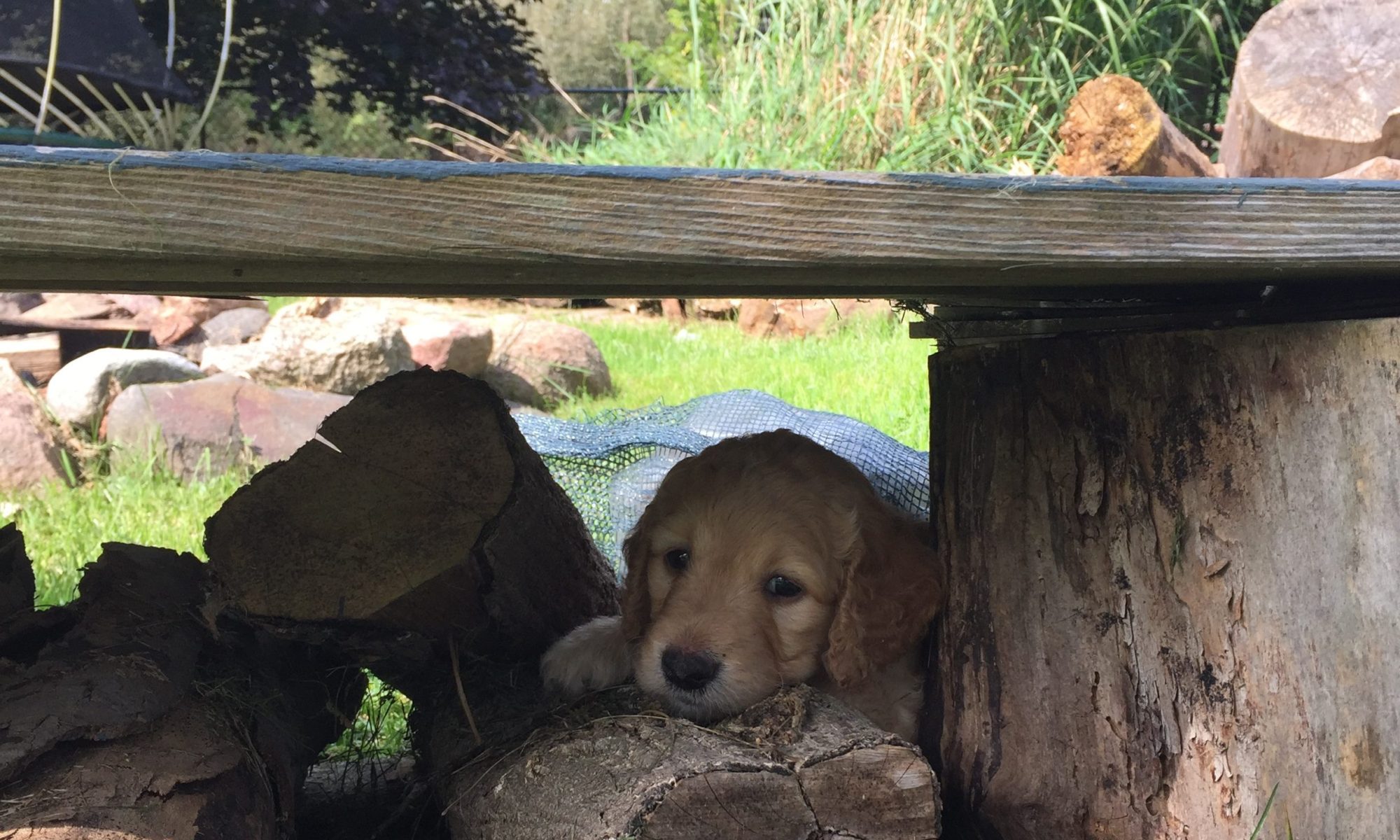
Maui’s adorable three-week-old puppies have been progressing rapidly this week. They are becoming more aware of their surroundings and beginning to play with one another during their short “awake” periods.

Maui is a fantastic mama. She’s very attentive to her little ones, feeding, cleaning, and caring for them. Her litter is smaller than Millie’s, which makes it easier for the puppies to gain weight. They’re very chunky, and I can feel a layer of fat on them. Great job, Maui!
Puppy Culture
Day 16 marked the end of ENS and ESI—the exercises we do to work their brains early on.


Critical Socialization Period (weeks 3 – 12)
The next period for Maui’s three-week-old puppies is the Critical Socialization Period. We know puppies have entered this period when they begin reacting to sounds. We raise our puppies by following many Puppy Culture protocols. Following these protocols helps us achieve our goal of “Raise Healthy, Calm, Confident, Well-Adjusted Puppies.”
Over the remaining weeks, we will be providing new experiences for the puppies, exposing them to as many as possible to raise the best companions for their forever families.


Emotional Intelligence
Because Goldendoodles are companion dogs, teaching emotional intelligence to young puppies and giving them a strong start is essential. With this in mind, we follow seven key practices to nurture a puppy’s emotional intelligence.
- Communication – giving a puppy his voice, i.e., communication manding and attention/distraction protocols
- Emotional stability – the ability to recover quickly from fear as well as stress, i.e., startle recovery, barrier challenges, etc
- Habituation – familiarize the puppies with as many things as possible during their Critical Development Period—in particular, Puppy Parties, sound protocols, household noises, and meeting different people and dogs.
- Enrichment—Teach the puppies that novelty and challenges are enrichment opportunities, not something to fear or avoid. For example, they can be introduced to new items on an ongoing basis at an activity centre, during car rides, outdoors, etc.
- Health – physical wellness and motor skills that will allow the puppy to develop neurologically and physically. For instance, daily weight checks, grooming, proper nutrition, fecal checks, deworming if necessary, and vet health checks and vaccinations.
- Skills – learned behaviours that teach the puppy to function in human society, i.e., recall, manding, simple commands, potty box training, crate introduction, resource guarding, bite inhibition, etc.
- Love – teach puppies to seek out the company of dogs and humans as emotionally positive experiences (e.g., Daily cuddles with humans and the puppy’s mom).
- Shaping emotional responses: happy and calm CERs (Conditioned Emotional Responses). For instance, using treats and encouragement during puppy training.
Socialization
My grandchildren love helping the puppies get used to being handled by people.
Looking Back At Week three
Looking Ahead to Week Four
- Puppies will still sleep much of the day/night as they continue to grow rapidly
- Interact with littermates through play, which will help develop essential social skills
- Practicing walking on all fours and strengthening their hind legs
- Becoming steadier on their feet
- Hearing will improve
- Puppy milk teeth will erupt
- Puppies will be moving to the main floor towards the end of the week

